Table Of Content

Translations of this era were superior to earlier ones, since the new Abbasid scientific tradition required better and better translations, and the emphasis was many times put in incorporating new ideas to the ancient works being translated. By the second half of the ninth century al-Ma’mun’s Bayt al-Hikma was the greatest repository of books in the world and had become one of the greatest hubs of intellectual activity in the Middle Ages, attracting the most brilliant Arab and Persian minds. The House of Wisdom eventually acquired a reputation as a center of learning, although universities as we know them did not yet exist at this time — knowledge was transmitted directly from teacher to student, without any institutional surrounding. Maktabs soon began to develop in the city from the 9th century on, and in the 11th century, Nizam al-Mulk founded the Al-Nizamiyya of Baghdad, one of the first institutions of higher education in Iraq. Caliph al-Rashid (ruled 786–809 CE) built a magnificent library named Khizanat al-Hikma (Library of Wisdom) filled with manuscripts and books in several languages.
The Official Chabad Lubavitch Phone Book
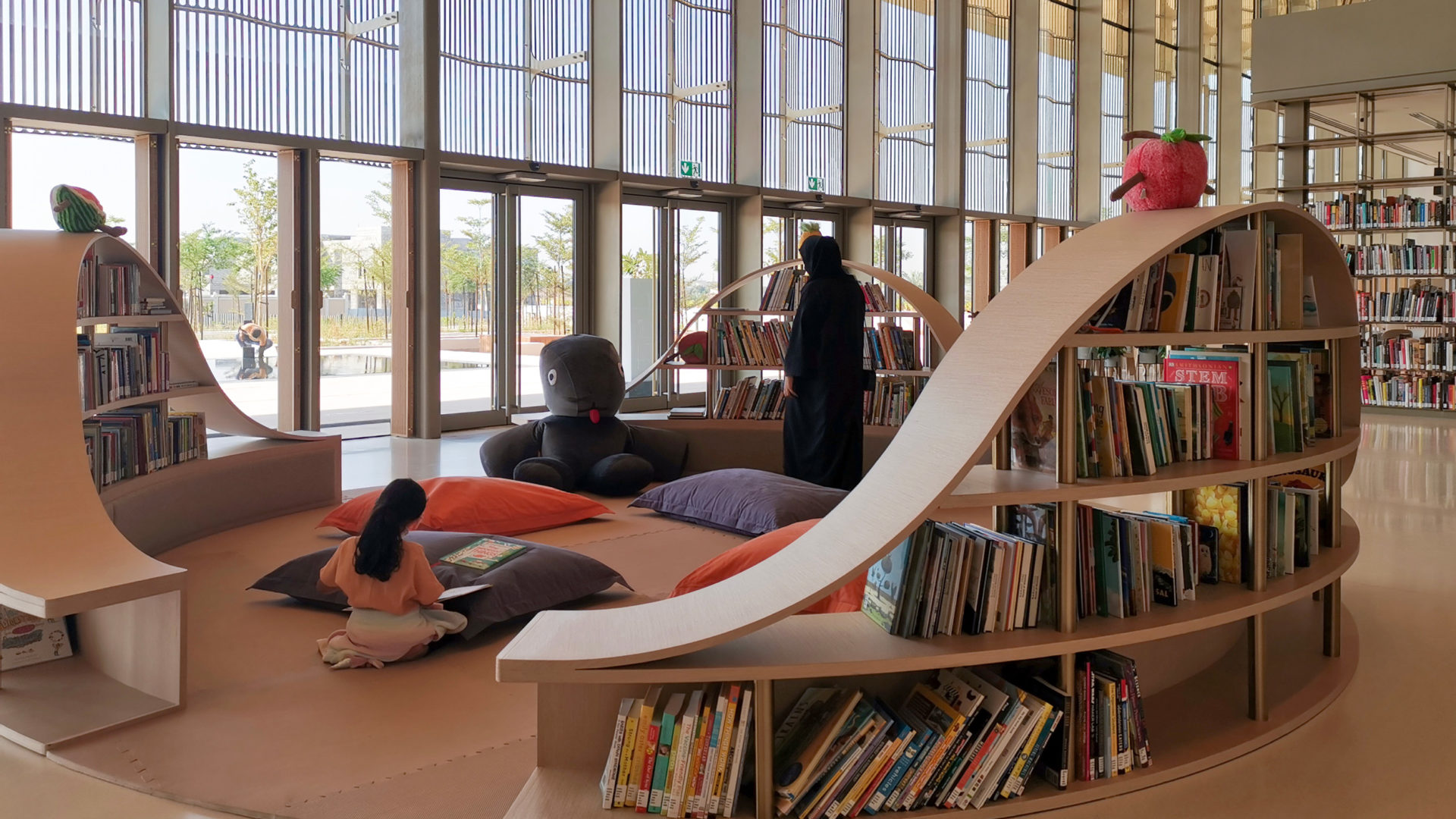
These were fundamental elements that contributed directly to the flourishing of scholarship in the Arab world. The House of Wisdom was a hub of intellectual scholarship that attracted thinkers and intellectuals from all over the Muslim world. It was established in Baghdad during the 9th century by Abbasid Caliph Haroun Al-Rashi as a library to house his private collection.
Notable intellectuals
In al-Khwarizmi’s early career, he proposed ideas towards the Hindu astronomical tables known as Sindhind. As a result, Caliph Al-Ma’mun sought al-Khwarizmi out to work on the science of equations. Al-Ma’mun was personally involved in the daily life of the House of Wisdom, regularly visiting its scholars and inquiring about their activities. Inspired by Aristotle, al-Mamun regularly initiated regular discussion sessions and seminars among experts in kalām. Kalām is the art of philosophical debate that al-Mamun carried on from his Persian tutor, Ja’far.
The House of Wisdom: Baghdad’s Intellectual Powerhouse
Abdullah Ibn al-Muqaffa ( ) was another pioneer of literary translation sponsored by the House of Wisdom. He took Greek words, such as "philosophia" that became "falsafa" in Arabic, and found translation solutions via what contemporary translators would call equivalents. Later, al-Mamun would appoint him head editor in charge of revising all translations at the House. Al-Mamun’s dedication to collecting texts and expanding the repository of classical knowledge earned him the nickname “the sage of Baghdad”. But Rashid’s eldest son, the seventh Abbasid caliph, al-Mamun ( ), had greater ambitions for the building. Therefore, the House of Wisdom at the time of Rashid was called Bayt al-Hikmah as it was comprised of a single building.
The Translation Movement gained great momentum during the reign of caliph al-Rashid, who, like his predecessor, was personally interested in scholarship and poetry. Originally the texts concerned mainly medicine, mathematics and astronomy; but, other disciplines, especially philosophy, soon followed. Al-Rashid’s library, direct predecessor to the House of Wisdom, was also known as Bayt al-Hikma or, as the historian Al-Qifti called it, Khizanat Kutub al-Hikma (Arabic for “Storehouse of the Books of Wisdom”). In 750, the Abbasid dynasty replaced the Umayyad as the ruling dynasty of the Islamic Empire, and, in 762, the caliph al-Mansur (r. 754 – 775) built Baghdad and made it his capital, instead of Damascus.
Daryl Fairweather, chief economist with brokerage Redfin, gave a more specific timeline. As if the art wasn’t enough, there are VR experiences where attendees can literally put on VR headsets and traverse through other worlds. The one Stuff in LA tried involved walking through some sort of distant land and using controllers to fire off insane patterns.
Ramadan Community Gathering coming to Waterfront Center - Edmonds Beacon
Ramadan Community Gathering coming to Waterfront Center.
Posted: Tue, 19 Mar 2024 07:00:00 GMT [source]
In modern times the library became a symbol of the scientific enterprise and imperial glory of the early Islamic period. It is frequently imagined as a centre of scholarship and collaboration for the greatest minds in Baghdad and its environs as well as the heart of a robust translation movement of Persian, Greek, and Syriac literature into the Arabic language. The House of Wisdom was originally created in order to house translators and preserve their works but it soon included additional research activities in the areas of medicine, science and astronomy. Two of the most important Caliphs, al-Rashid and al-Ma’mun, had personal interests in scientific works.
Ancient-Origins
Brought from China, paper became a new and cheaper material for writing, which was previously done on parchment from the skin of animals, a much more time consuming and expensive process. A wide range of languages including Arabic, Farsi, Aramaic, Hebrew, Syriac, Greek and Latin were spoken and read at the House of Wisdom. This is a list of notable people related to the House of Wisdom and the rise of Arab science.
Assassin's Creed Mirage: All Abbasiyah Gear Chest Locations (& How to Get Them) - GameRant
Assassin's Creed Mirage: All Abbasiyah Gear Chest Locations (& How to Get Them).
Posted: Sat, 14 Oct 2023 07:00:00 GMT [source]
It quickly became one of the most famous centers of learning, attracting scholars from all over the world, from many cultures and religions. This recognition about who was the original founder of the center can become confusing and further details explaining the order of events might assist in this understanding. Al-Rashid was the one who gathered most of the different books, manuscripts and objects coming from his father and grandfather, and started the collection. Eventually this compilation of different materials became so large that al-Ma’mun had to build an extension to the original building, turning it to a large academy which, then, came to be known as the House of Wisdom.
This theory is debatable, owing to the destruction of the Round city of Baghdad and conflicting sources in both academic texts and poetry. It is likely, given the Abbasid Caliphs’ patronage of the arts and sciences, that an extensive library existed in Baghdad, and that scholars could have access to such texts, judging by the volume of work produced by scholars centered in Baghdad. Without consistent naming conventions, a physical ruin, or corroborating texts, the phrase “House of Wisdom” may just as well have been a metaphor for the larger Academic community in Baghdad rather than a physical academy specializing in translation work. Under the sponsorship of caliph al-Ma’mun (r. 813 – 833), economic support of the House of Wisdom and scholarship in general was greatly increased. Indeed, Ptolemy’s Almagest was claimed as a condition for peace by al-Ma’mun after a war between the Abbasids and the Byzantine Empire. In the Abbasid Empire, many foreign works were translated into Arabic from Greek, Chinese, Sanskrit, Persian and Syriac.
Intent on securing his rule, al-Mamun moved his official residence to Baghdad, bringing his authority and royal patronage to the House of Wisdom. The House of Wisdom’s main project was collecting and translating numerous works from the Greek literary canon, which established an enormous influence on Arab thought. Works including those by Plato, Aristotle, Ptolemy, Hippocrates and Euclid were requested from libraries in the West, such as the library at Constantinople, and brought back to Baghdad to translate. Under Caliph al-Mamun ( ), who was an enthusiastic promoter of the House, it was greatly extended to include separate galleries for each branch of science. The existence of the House of Wisdom is presently disputed, as is its form and function. Arabist Dimitri Gutas posits in his 1998 book that “House of Wisdom” is a translation error from Khizanat al-Hikma, which he asserts simply means a storehouse, and that there are few sources from the era during the Abbasid Era that mention the House of Wisdom by the name Bayt al-Hikma.
This allowed Muslim scholars to verify astronomical information that was handed down from past scholars. The study highlights the development that marked the house of wisdom in the time of the Abbasids. The main objective of this paper is to explore the impact of the house of wisdom on the Islamic libraries, moreover it studies the organizational structure of Bayt al-Hikmah along with library divisions and services that it provided for scholars and readers.
During the Umayyad era, Muawiyah I started to gather a collection of books in Damascus. He then formed a library that were referred to by the name of “Bayt al-Hikma”.Books written in Greek, Latin, and Persian in the fields of medicine, alchemy, physics, mathematics, astrology and other disciplines were also collected and translated by Muslim scholars at that time. Remarkably, the Umayyads also appropriated paper-making techniques from the Chinese and joined many ancient intellectual centers under their rule, and employed Christian and Persian scholars to both translate works into Arabic, and to develop new knowledge.
It was disorientating in a positive way; it also was funny to watch each other look silly. The experience is grounded by Samskara, the name given the art exhibit created by Android Jones, who participated in the Grateful Dead Fare Thee Well Tour and has had his work been projected on the Sydney Opera House and the Empire State Building. Jones created over 70 pieces of artwork in 9 different formats for Wisdome L.A., and our representatives described them as super colorful, trippy, detailed, Avatar-like, and just generally tough to look away from.
The House of Wisdom also housed an observatory which facilitated astronomical advancements, leading to refinements of such scientific tools as the astrolabe. The Assyrian scholar Yahya Ibn al-Batriq ( ) translated all the major works of the ancient Greek physicians, including Galen and Hippocrates. He also compiled the universal Kitab Sirr al-Srar, known in the West as the Secretum Secretorum (Secret of Secrets). The doctor Hunayn Ibn Ishaq (1405–68), accompanied by his son Ishaq ibn Hunayn and his nephew Hubaysh, was one of the most important translators of Greek medical and scientific treatises. Works translated at the House of Wisdom include Aristotle’s books Rhetoric, Poetics, Metaphysics, Categories and On the Soul, as well as Plato’s Republic, Laws and Timaeus. One popular narrative holds that the impetus behind the translation movement was because of Al-Mamun’s encounter with Aristotle in a dream.




No comments:
Post a Comment